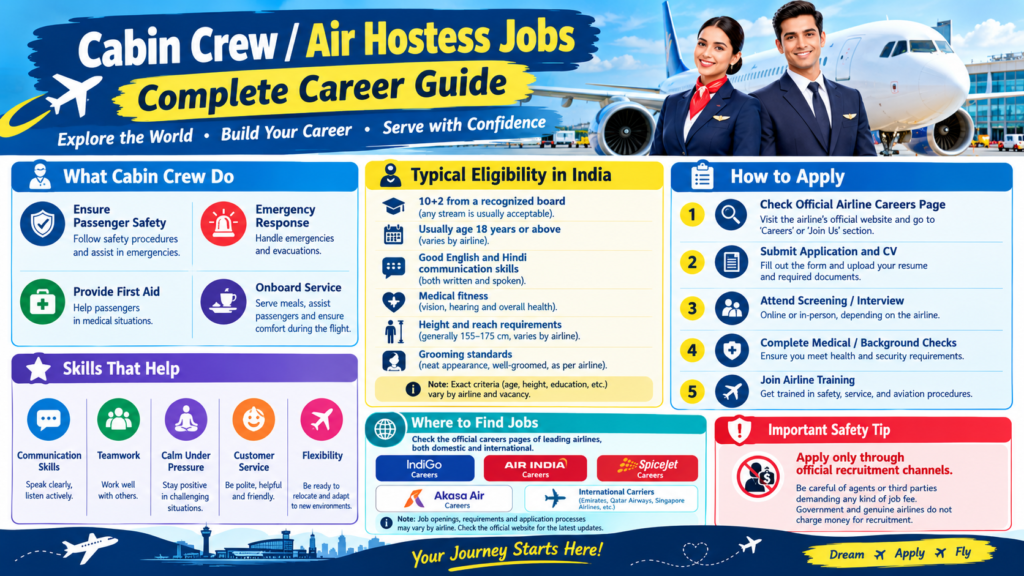
Ticketing and reservation executive jobs are among the most stable and beginner-friendly airline jobs and travel industry jobs available today. Every journey, whether a domestic flight, an international holiday, or a corporate business trip, begins with a booking, and the professionals who handle those bookings are the ticketing and reservation executives.
They work for airlines, travel agencies, tour operators, online travel companies and corporate travel departments, helping customers find the best fares, build itineraries and receive confirmed tickets. If you enjoy working with people, have a good eye for detail, and want a career in aviation and tourism, this role offers a practical starting point with real growth potential.
The demand for trained airline reservation agents and travel ticketing executives continues to grow as global travel expands. Even with the rise of online booking platforms, complex itineraries, group bookings, corporate travel, and special requests still need skilled human professionals.
This guide explains what ticketing and reservation executives do, the types of jobs available, eligibility criteria, the GDS systems you must learn, the best travel and ticketing courses, ticketing executive salary expectations, and how to apply and get hired.
What Does a Ticketing and Reservation Executive Do?
A ticketing and reservation executive manages the booking, changing, cancelling, and issuing of travel tickets. The day usually begins by reviewing pending requests, emails, fare updates and airline notices.
When a customer wants to travel, the executive checks flight schedules, seat availability, fare rules and baggage allowances, then recommends suitable options. Once the customer confirms, the executive creates a Passenger Name Record (PNR), enters passenger details accurately, collects payment and issues the e-ticket.
The role goes well beyond simple booking. Executives handle flight rescheduling, refunds and cancellations, name corrections, seat selection, special meal requests, wheelchair assistance, and visa or passport guidance.
They calculate fare construction, apply taxes and surcharges, and explain complex airline policies in simple language. In corporate settings, they manage employee travel, ensure compliance with company travel policy, and negotiate better fares. Accuracy is vital because a small spelling error or incorrect date can lead to costly changes or denied boarding.
Good ticketing executives also build relationships. Loyal customers return for reliable service, and agencies depend on executives who solve problems quickly, such as rebooking passengers after cancellations or finding last-minute seats during peak season.
Types of Ticketing and Reservation Jobs
The travel industry offers several categories of ticketing jobs. Airline reservation executives work directly for airlines, either in call centers, sales offices or airport counters, handling bookings and customer queries for the carrier’s own flights.
Travel agency ticketing executives work for retail agencies and use multiple airline inventories to find the best options for customers. Online travel agency (OTA) jobs involve supporting web and app-based bookings, resolving booking issues and managing customer care.
Corporate travel executives manage business travel for companies, including flights, hotels, visas and expense reporting. Tour operator reservation staff build holiday packages, handle group bookings and coordinate with hotels and transport providers.
Airline call centre jobs include inbound sales, customer service and after-sales support. There are also specialised roles such as fares and ticketing analyst, revenue accounting executive, group desk executive and refund and exchange specialist, which often pay higher salaries and require advanced knowledge.
Many professionals begin in a basic ticketing position and later move into travel consultant, team leader, sales manager, or travel operations manager roles, depending on experience and certification.
Eligibility Criteria for Ticketing Executive Jobs
The eligibility criteria for ticketing and reservation jobs are generally easier to meet than for many other aviation roles. Most employers require candidates to have completed 12th grade or hold a bachelor’s degree in any discipline. Graduates in tourism, hospitality, business, or commerce may have an advantage, but it is not compulsory. For senior or corporate positions, a degree and prior experience are often preferred.
Strong English communication skills, both spoken and written, are essential, since you will interact with customers and read airline rules and fare conditions. Knowledge of Hindi or other local and international languages can be helpful. Basic computer skills, typing speed, and numerical ability are also important because the job involves entering data, calculating fares, and managing digital systems.
Unlike cabin crew or pilot roles, there are usually no strict height, weight, or medical requirements. Employers prefer candidates with a pleasant personality, patience, politeness, and a customer-first attitude. Fresh graduates can often enter the industry through trainee roles, particularly if they have completed a recognised ticketing course.
Understanding GDS Systems: Amadeus, Sabre and Galileo
One of the most valuable skills for airline ticketing jobs is proficiency in Global Distribution Systems (GDS). A GDS is a computerised network that connects travel agents and airlines, allowing real-time access to flight schedules, fares, seat availability, hotel rooms and car rentals. The three major GDS platforms are Amadeus, Sabre, and Galileo (now part of Travelport), each used widely across different regions and companies.
Learning a GDS involves mastering command-based entries to search flights, check fares, create PNRs, issue tickets, apply fare rules, and manage changes. Many beginners find the command language intimidating at first, but with regular practice it becomes second nature.
Employers value candidates with a GDS certification because it reduces training time and shows that you are ready to work from day one. Candidates who know more than one GDS are even more attractive, as many agencies use multiple systems.
Modern technology is also changing the field. NDC (New Distribution Capability) standards, online booking engines, and API-based systems are transforming how tickets are sold. Professionals who understand both traditional GDS and newer digital tools will have a strong long-term advantage.
Best Courses for Ticketing and Reservation Careers
Although some companies hire and train freshers, completing a relevant travel and ticketing course greatly improves your chances. Popular options include a diploma in airline ticketing and reservation, IATA/UFTAA foundation and consultant courses, GDS training in Amadeus, Sabre and Galileo, a diploma in travel and tourism management, airport and airline customer service courses, and a BBA or BA in tourism and aviation.
IATA courses are especially respected because IATA is the global trade association for airlines. The IATA/UFTAA Travel and Tourism Consultant programme, for example, covers fares, ticketing, geography, airline codes and customer service, and it provides an internationally recognised credential. Short certification programmes in airfare and ticketing, air cargo, dangerous goods and customer relationship management can also add value to your resume.
When choosing a travel and aviation institute, check the trainers’ industry experience, access to live GDS practice, internship opportunities, and student feedback. Avoid academies that guarantee jobs or ask for hidden fees. A good institute teaches practical skills such as airline codes, city codes, fare calculation, and PNR creation, along with communication and soft skills.
Ticketing Executive Salary and Benefits
Candidates often search for ticketing executive salary and airline reservation agent salary before choosing this career. Pay depends on the employer, city, experience and skill level. Entry-level executives at travel agencies or call centres typically start with a modest monthly salary, while airline employees and corporate travel specialists generally earn more. Executives with strong GDS skills, fare knowledge and sales ability can earn attractive incentives and commissions.
Airline reservation and ticketing staff often receive additional benefits, such as discounted or free staff travel tickets, medical insurance, provident fund, paid leave and performance bonuses.
Travel agencies may offer familiarisation trips, training and sales incentives. Corporate travel desks usually provide stable working hours and good benefits. Working abroad, especially in the Gulf region, Europe and Southeast Asia, can bring higher pay, tax advantages and accommodation support.
Career progression raises income steadily. Moving from executive to senior executive, team leader, assistant manager, and manager brings greater responsibility and salary. Those who start their own travel agency business can earn even more, although they also take on financial risk.
How to Apply for Ticketing and Reservation Jobs
To apply for ticketing and reservation executive jobs, begin with a well-prepared resume. Highlight your education, GDS certifications, language skills, typing speed, computer knowledge, and any customer service experience. Keep the resume to one page, use a clear format, and include accurate contact information. A short cover letter explaining your interest in the travel industry can help you stand out.
Search for openings on official airline career pages, travel company websites, aviation job portals, and professional networking platforms. Register for job alerts and follow industry pages for hiring announcements. Many agencies and call centers also hold walk-in interviews, so keep your documents ready. Consider internships with travel agencies, which can provide hands-on exposure and often lead to full-time jobs.
Never pay money to agents claiming to guarantee a job. Genuine employers do not charge recruitment fees, and you should always verify companies through their official websites.
The Interview and Selection Process
The selection process for airline reservation jobs and travel agency positions usually includes a resume screening, written test, computer test, group discussion, and personal interview. Written tests may cover English grammar, basic mathematics, general knowledge, geography, airline codes, and aptitude. Computer-based tests can assess typing speed and accuracy. For GDS-based roles, some employers conduct a practical assessment in which candidates create sample PNRs or calculate fares.
In the interview, expect questions about why you want to work in travel, how you handle difficult customers, what you know about the company, and how you manage pressure during peak season. You may also face scenario-based questions, such as helping a passenger whose flight has been cancelled. Use clear, confident answers and show empathy and problem-solving ability.
Prepare by revising airline and city codes, major world geography, time zones, and basic travel terms. Practise explaining fare rules in simple language. Dress formally, arrive early, and maintain a polite, positive attitude. Employers want candidates who are accurate, patient and enthusiastic about helping customers.
Skills Required to Succeed in Ticketing and Reservation Roles
Success in travel ticketing careers depends on a blend of technical and interpersonal skills. Attention to detail is the most important, since errors in names, dates, or fare rules can cause serious problems. Strong communication skills help you explain options, negotiate with customers, and coordinate with airlines. Patience and empathy are crucial when handling cancellations, delays and refund disputes.
Technical skills include GDS proficiency, computer literacy, fare calculation, knowledge of airline and airport codes, geography, and understanding of visa and passport requirements. Sales skills help executives upsell hotels, insurance, and upgraded services, which can increase both revenue and incentives.
Time management and multitasking allow you to manage multiple bookings and queries simultaneously. Finally, adaptability matters, because airline rules, fares, and technology change constantly.
Advantages and Challenges of the Ticketing Profession
The advantages of ticketing and reservation executive jobs are considerable. Entry barriers are relatively low, training is short, and the demand is steady. The work is mostly office-based, with predictable hours compared to flying roles.
You gain valuable knowledge of destinations, airlines, and travel regulations, and many employers offer travel discounts and familiarisation trips. The skills are transferable across airlines, agencies and corporate travel, which provides flexibility and job security.
Challenges include pressure during peak seasons, dealing with frustrated customers when flights are disrupted, and the need to keep learning as technology evolves. Targets and sales incentives can be demanding, and some positions involve shift work, especially in airline call centers. Online booking platforms have also changed the market, so executives must provide added value through expertise and personalised service. Those who adapt and upgrade their skills will continue to thrive.
Career Growth and Future Prospects
A ticketing career can open many doors. After gaining experience, you can become a senior ticketing executive, travel consultant, team leader, assistant manager or travel operations manager.
Some professionals specialise in corporate travel management, airline revenue management, fare analysis or airline sales and marketing. Others move into airport roles, tour operations, destination management or travel technology companies.
Entrepreneurship is another option. Experienced professionals often start their own travel agencies or become IATA-accredited agents, offering ticketing, visa assistance, holiday packages and corporate travel services.
The future outlook is positive because global tourism is expanding, and businesses need specialists to manage complex travel needs. Professionals who combine traditional ticketing expertise with digital skills, data analysis and customer relationship management will be best placed for long-term growth.
Tips to Get Hired Faster
Start by building a strong foundation. Learn airline codes, city codes, and world geography, and practise using a GDS through a reputable course. Improve your English and typing speed, and gain customer service experience through internships or part-time jobs. Complete at least one recognised certification, such as an IATA course, to strengthen your resume and show commitment.
Network with professionals in travel agencies and airlines, attend career fairs, and follow industry updates. Keep your resume updated and apply to multiple companies, including smaller travel agencies, which often hire freshers and offer broader hands-on experience. Be patient, learn from each interview, and keep improving. Avoid fraudulent offers, and verify every opportunity before sharing documents or making payments.
Conclusion
Ticketing and reservation executive jobs offer a practical, rewarding route into the aviation and travel industry. With manageable entry requirements, strong demand and clear career progression, the role suits graduates and freshers who enjoy customer interaction and detailed work. By completing a recognised ticketing course, mastering GDS systems such as Amadeus, Sabre and Galileo, building communication skills and applying through genuine channels, you can build a stable and growing career. Whether you aim to work for an airline, a corporate travel desk or your own travel agency, dedication, accuracy and a customer-first mindset will help you succeed in this dynamic industry.