For decades, the standard path to a Hollywood fortune ran through a bigger movie salary. A growing group of women in entertainment has taken a different route. They kept acting, but they used their fame as a launchpad for beauty brands, wellness companies, production studios, apparel businesses, and consumer products, and in several cases the business has become worth far more than the acting career.
This article looks at the best-known examples, explains how each woman built her business income, and highlights the wealth management lessons behind them. A note on the numbers before we begin: celebrity net worth figures are estimates, not audited statements, and different outlets disagree widely. Private-company stakes are especially hard to value, so every dollar figure here should be read as an approximation that can change quickly.
Why Business Ownership Beats a Bigger Paycheck
A film salary, even a $20 million one, is taxed at the top income tax rate, shared with agents and managers, and paid once. Owning part of a company works differently. If the company grows, the owner’s equity can be worth many times any single paycheck, and a sale or public listing can convert that equity into cash. That is why the biggest wealth stories in this group involve ownership of a brand rather than appearance in a film.
The model also lowers risk. An actor’s income depends on being cast, while a company can continue earning when the founder is not on set. Combining the two, as the women below have done, gives them diversified income streams and long-term bargaining power in contract talks.
Selena Gomez: Rare Beauty and the Billionaire Debate
Selena Gomez is the clearest modern example of a performer whose business outgrew her acting career. She launched Rare Beauty, a makeup brand, in September 2020 through Sephora. In September 2024, the Bloomberg Billionaires Index put her net worth at about $1.3 billion, with roughly $1.1 billion of that tied to her reported 51 percent stake in the company.
Forbes values the brand at about $1.3 billion in total, which leads to a much lower personal estimate of around $700 million. Celebrity Net Worth uses a more conservative figure near $1 billion in a 2026 estimate. The gap between those numbers illustrates how hard private-company valuation is.
Forbes has reported that Rare Beauty generated nearly $370 million in revenue in 2023, and in February 2026 the brand expanded into more than 1,500 Ulta Beauty stores. Bloomberg also reported that Gomez hired advisers to weigh a possible sale at a roughly $2 billion valuation, though she later said publicly that she had no plans to sell. Treat that as a reported possibility, not a deal.
Her other income is much smaller by comparison. Bloomberg’s breakdown assigned about 2.6 percent of her wealth to her mental health startup, Wondermind, roughly 6.9 percent to luxury partnerships, and about 4.8 percent to touring. Forbes has reported that she earns about $600,000 per episode of Only Murders in the Building.
The lesson is stark: a successful actor and singer earned a fraction of what a single consumer brand produced. Rare Beauty also built mental-health giving into its model, with a commitment to donate one percent of sales to a fund for mental health services, which strengthened the brand’s identity and customer loyalty.
Reese Witherspoon: Hello Sunshine and the Power of Audience
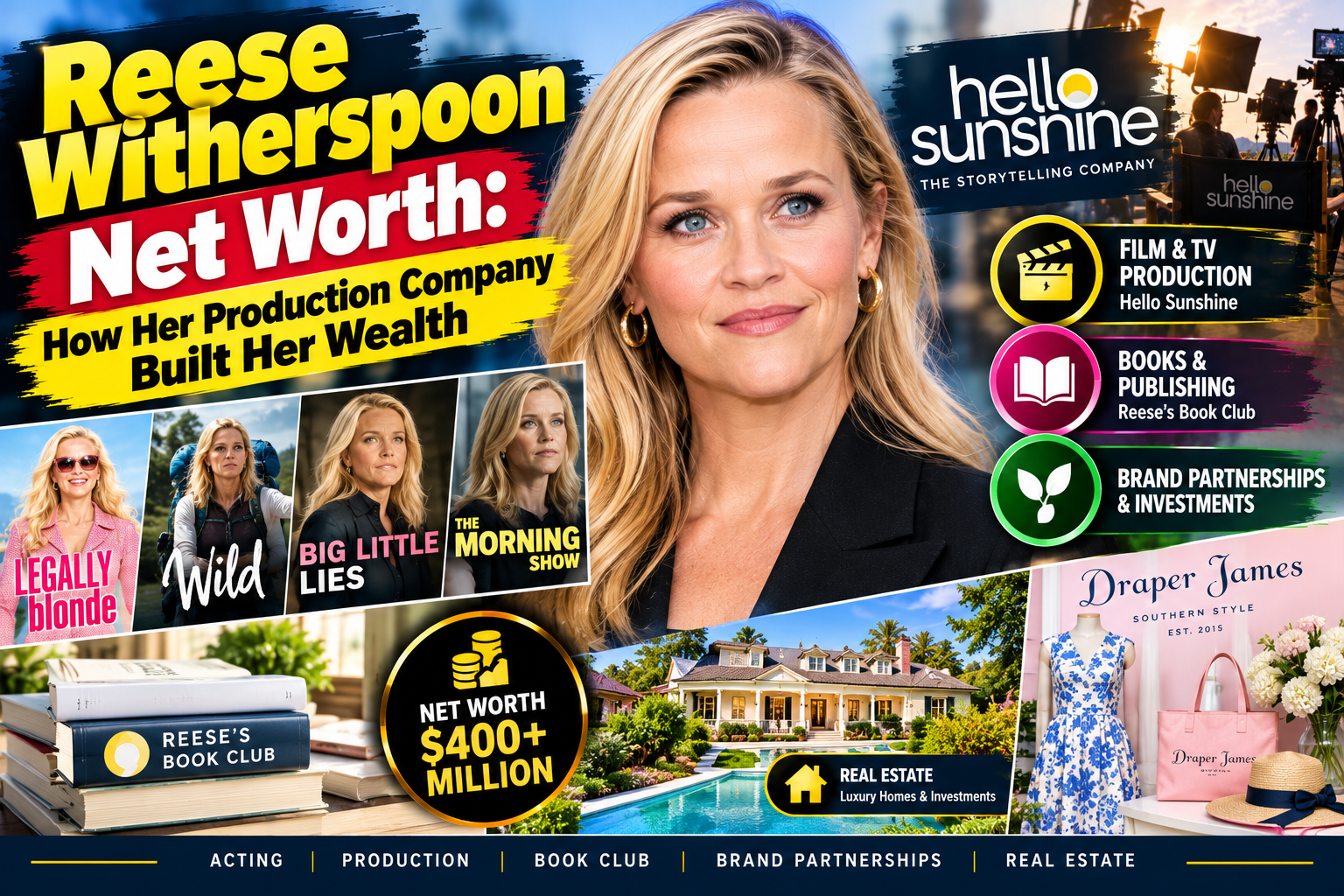
Reese Witherspoon built a media company, Hello Sunshine, around female-led stories, along with Reese’s Book Club and the apparel brand Draper James. In August 2021, she sold a majority stake in Hello Sunshine to a media company backed by Blackstone at a valuation of about $900 million. That figure was the company’s valuation, not her personal payout. Celebrity Net Worth reports that she is believed to have owned about 18 percent, and her personal proceeds have never been disclosed. Estimates of her net worth range from about $300 million to $440 million.
Her case shows why ownership percentage matters. A headline valuation and an individual’s take are very different numbers, and later changes in a company’s value can move an owner’s stake up or down. It also shows the strength of building an audience first: the book club gave her a direct relationship with millions of readers who later became viewers.
Margot Robbie: LuckyChap and the Producer Model
Margot Robbie co-founded LuckyChap Entertainment in 2014 with her husband, Tom Ackerley, and partners Josey McNamara and Sophia Kerr. The company has produced I, Tonya, Promising Young Woman, Saltburn, and Barbie. For Barbie, which grossed about $1.4 billion, estimates suggest she earned around $50 million in total from a $12.5 million upfront salary plus back-end participation, with LuckyChap also benefiting as a producer. Her net worth is typically estimated at $60 million to $80 million, though older numbers predate the film and some low-quality pages claim far more.
Robbie also launched a gin brand, Papa Salt. It is young, and its value is not public, but it fits her pattern of seeking ownership alongside acting fees. The key lesson from her story is that production equity gives a performer influence over which projects get made and a share of the upside when they succeed.
Jennifer Aniston: LolaVie and Brand Building
Jennifer Aniston’s biggest financial engine remains the long afterlife of Friends, but she has also built businesses. In 2021 she launched LolaVie, a haircare line, and she has been connected to equity stakes in wellness and beauty companies over the years. Her net worth is commonly estimated at about $320 million, with a range from roughly $300 million to $420 million depending on the source.
Estimates of LolaVie’s value are speculative because the company is private. Even so, Aniston’s example shows how an established star can add a consumer brand to a career already supported by residual income. A recognizable name reduces marketing costs for a new product, though it does not guarantee success; the beauty industry is crowded, and many celebrity lines fail.
Scarlett Johansson: The Outset and Producing
Scarlett Johansson launched The Outset, a skincare brand, in 2021 and has a production company, These Pictures. Her net worth is most often estimated at about $165 million, with some outlets listing as much as $200 million. Most of her wealth comes from film salaries and back-end participation, including her work in the Marvel franchise, so her businesses are better viewed as supplementary income streams than as the main engine. Still, a skincare brand and a production company give her ownership in categories that can outlast any single role.
Jessica Alba: The Honest Company
Jessica Alba co-founded The Honest Company in 2011 and 2012, a maker of non-toxic baby, household, and personal-care products. The company reached a valuation of more than $1 billion in a private funding round, went public on the Nasdaq in 2021, and has faced a rougher road since, including labeling lawsuits and a lower valuation in later funding. Reports in 2026 describe a company with a market value of roughly $400 million, and Alba has stepped back from day-to-day operations while remaining a visible leader.
Estimates of her personal net worth vary enormously, from about $60 million to $100 million on one site to several hundred million on pages that appear unreliable. The company itself is public, so its share price is verifiable, but her personal stake and the taxes on it are not. Her story is useful because it shows both sides of founder wealth: a brand can create enormous paper value quickly, but a public company is subject to market volatility, competition, and investor expectations.
Gwyneth Paltrow: Goop and Wellness Retail
Gwyneth Paltrow turned a newsletter into Goop, a wellness and lifestyle company that sells products, publishes content, and operates retail and e-commerce channels. The company has been valued in the hundreds of millions of dollars in private funding rounds, and its brand has been both influential and controversial, drawing criticism and legal scrutiny over some health claims. Paltrow’s net worth is generally estimated at around $200 million, though that figure is a rough estimate.
Goop illustrates the benefit and the risk of a personal brand business. The founder’s identity is the product, which can drive attention and sales, but it also means reputational problems can hit the company directly. For entrepreneurs, it is a reminder to build systems and a team that can support the brand beyond one person.
Kate Hudson, Jennifer Lopez, and Others
Several other stars fit the same pattern. Kate Hudson co-founded the activewear subscription company Fabletics, which grew into a large online and retail business and later added a supplement brand. Jennifer Lopez launched a beauty line and has long been known for fragrance, apparel, and endorsement businesses alongside her acting and music career. Drew Barrymore launched a cosmetics line, and Halle Berry has moved into wellness and menopause-related products. The details, valuations, and ownership percentages of these ventures vary and are not always public, so readers who want precise numbers should check recent reporting. What the group has in common is a decision to turn visibility into equity.
A Quick Comparison
Star
Main business
How the wealth is described
Selena Gomez
Rare Beauty, Wondermind
Estimated $700 million to $1.3 billion, mostly from a private stake
Reese Witherspoon
Hello Sunshine, Draper James
Estimated $300 million to $440 million; the $900 million was the company’s valuation
Margot Robbie
LuckyChap, Papa Salt
Estimated $60 million to $80 million, rising after Barbie
Jennifer Aniston
LolaVie, equity stakes
Estimated $300 million to $420 million, mostly from Friends and acting
Scarlett Johansson
The Outset, These Pictures
Estimated $165 million to $200 million
Jessica Alba
The Honest Company
Personal estimates vary widely; the company has a lower market value than at its peak
Gwyneth Paltrow
Goop
Roughly $200 million, an approximate figure
What the Pattern Shows
Three themes run through these stories. First, ownership matters more than endorsement: a star who owns a majority stake in a brand can earn far more than one who is paid to promote someone else’s product.
Second, authenticity drives results: Rare Beauty’s mental-health mission, Hello Sunshine’s focus on women’s stories, and Honest’s founder-as-parent origin all connected a product to a personal identity. Third, valuation is not wealth: the headline price of a company can be far above what a founder actually receives or keeps after investors, taxes, and later price changes.
There is also a caution. Most celebrity-backed brands fail, and several of the stories above include setbacks. A famous name lowers the cost of getting attention, but it does not replace a strong product, careful cost control, and good management.
Lessons You Can Use
You do not need to be famous to apply these ideas. First, look for ways to own part of what you create, whether that is a business, a product, or a stake in an employer. Second, start with an audience or a clear problem you understand, and build around it.
Third, separate valuation from cash in hand when evaluating any deal. Fourth, build a team that can run the business without you, and put partnership agreements in writing. Fifth, invest steadily in index funds, a retirement account, and real estate; keep debt under control; and protect your wealth with proper insurance, an estate plan, and advice from a financial advisor or certified public accountant.
Final Thoughts
The strongest wealth stories among women in Hollywood today are less about bigger paychecks and more about ownership. Selena Gomez’s reported billion-dollar stake in a makeup brand, Reese Witherspoon’s media company, Margot Robbie’s production studio, and a growing list of beauty and wellness founders show how fame can be converted into long-term assets when it is combined with focus and good timing. At the same time, the gap between headline valuations and personal wealth, and the setbacks some brands have faced, are reminders to treat every large number with care.
Because the figures in this article come from third-party estimates and press reports, they may be incomplete or out of date. For the latest information, consult outlets such as Forbes, Bloomberg, Variety, and The Hollywood Reporter. The central lesson holds: lasting wealth usually comes from owning part of what you help create and managing it with patience.
Disclaimer: This article is for general information and entertainment purposes only. Net worth, valuation, and deal figures are unaudited third-party estimates and may be inaccurate or out of date. Nothing here is financial, legal, or investment advice; consult a licensed professional before making financial decisions.